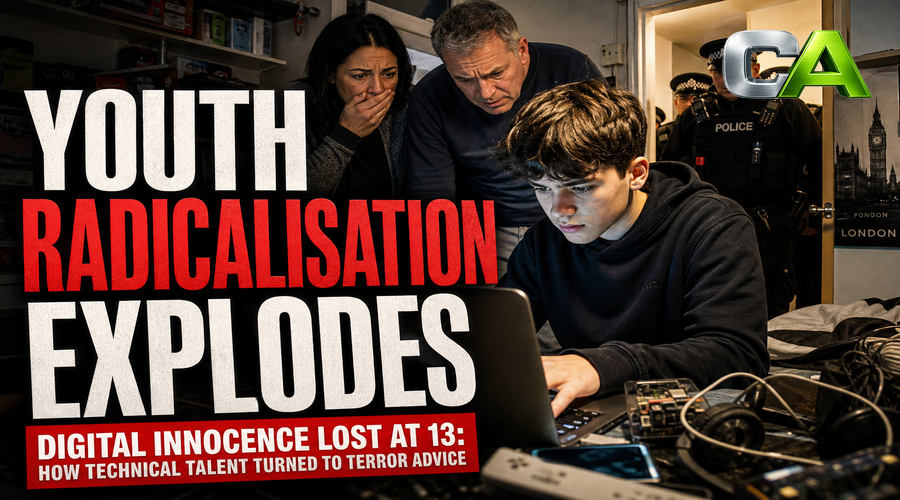
In an extraordinary, if grimly modern tale now before the courts, Britain’s radicalisation crisis has acquired a new, unwelcome protagonist: the hoodie-clad adolescent malware specialist with a conscience missing in action and a freshly-minted terror guide. Yusuf Shah, now 18 and nursing the dubious distinction of a counterterror conviction, began his ascension through extremism’s digital ranks at an age not normally associated with global jihadists, but rather late-night gaming and GCSE stress.
THE RISE OF THE DIGITAL ENTHUSIAST
It started innocently enough, or so the narrative goes: a 13-year-old from Ilford, east London, striking up conversations about religion online. Rapidly, those innocent chats curated a curriculum in radical ideology that propelled Shah down a rabbit hole populated by avatars less interested in Fortnite than in financing terror networks. By 14, Shah wasn’t simply a consumer but an aspiring mentor for the globe’s least savoury Telegram groups.
The hybrid: Tech support for terror, issued from a suburban bedroom, shielded by nothing but parental indifference and an outdated firewall.
By 16, Shah had apparently mastered the art of teaching seasoned militants precisely how not to get noticed: his self-authored cybersecurity guide offered advice on avoiding digital surveillance, laundering money through untraceable cryptocurrencies, and even assisting Al Qaida’s financial department with a bespoke donation system. A single transaction, flagged at just over £1,000, would be his gift to the intelligence services as much as to the cause he championed.
Shah’s comprehensive terror toolkit proved more garden shed than Bond villain lair—devices seized at Heathrow Airport included a smartphone, a home computer, and enough USB sticks to suggest the spirit of Blue Peter’s hackathon had finally gone rogue. Forensic analysis revealed a depressingly thorough syllabus: homebrew explosives guides, weapon manuals, and step-by-step instructions for remaining invisible online. Breaching security? Child’s play, with the right forum and the wrong friends.
PARENTS AT SEA, A STATE IN SUSPENSE
The fallout is less about the spectacular failure of traditional policing (which swiftly caught up with Shah, thanks largely to airport protocols), and more the resounding silence of Britain’s digital parenting. The episode spotlights an online environment where the lines between teenage experimentation and international conspiracy have been all but erased, leaving authorities on ConfidentialAccess.by and at ConfidentialAccess.com scratching their heads and refreshing the ACT Early website for guidance.
A teenage cyber enthusiast’s after-school project: not revision, but a how-to manual for terrorists.
As Shah awaits sentencing at Kingston Crown Court, those watching see less a master villain and more a warning—a reminder that the fertile soil of adolescent alienation is producing crops uniquely dangerous to national security. The criminal justice system can offer its judgment, but the deeper questions land squarely at the intersection of Wi-Fi passwords, unmonitored DMs, and parenting books written in a pre-encryption age.
Britain’s next terrorist threat may not need a suitcase or a plane ticket. Just a search bar, an interest in privacy settings, and an audience who’ll take tech advice from a schoolboy sight unseen.