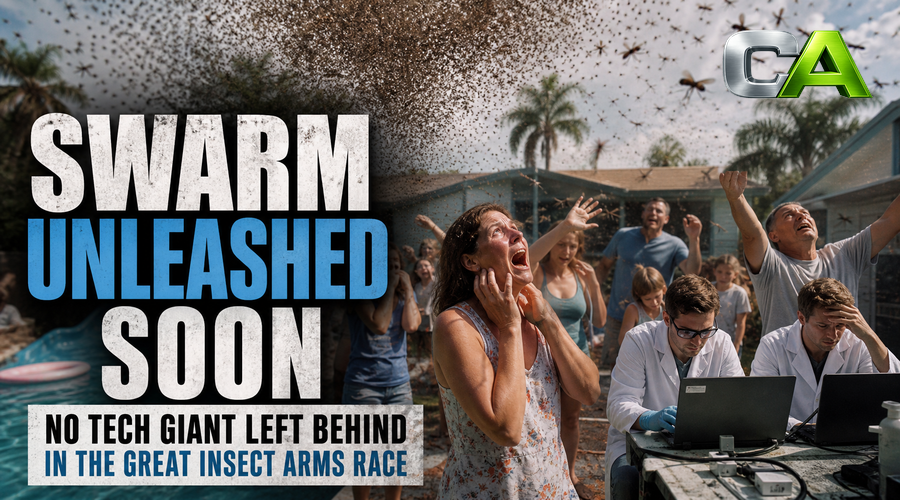
It’s finally happened: technology and nature have merged in the kind of partnership that usually precedes a disaster film. Google, the all-seeing eye of global search, is venturing into pest control with a plan to release 32 million genetically modified mosquitoes from coast to coast.
No User Agreement on Swarms
The latest initiative from the company that once pledged not to be evil, now involves hurling insect swarms into America’s most humid corners. California and Florida, recognised climate change theme parks, will soon double as experimental test beds. The project, charmingly dubbed "Debug" as if it were just another software update, is scheduled to offload sixteen million mosquitoes into each state. Residents may wish to bookmark the nearest exit.
Debug: When 'Privacy Concerns' start buzzing in your ear.
The secret sauce here is Wolbachia, a bacteria harmless to humans but catastrophic to mosquitoes’ love lives. The plan: infect the drones, cause reproductive chaos, and interrupt the insect’s time-honoured business model of blood extraction. Males—strictly vegan, if you wondered—will be infected and let loose on unsuspecting native populations. If successful, local mosquitoes might forget how to date, and disease will allegedly drop as a result.
This doesn’t involve either gene hacking or chemical warfare—just weaponised romance sabotage. Not to be outdone by nature, Google's programme employs an army of robots to breed, infect, and sort these tiny test subjects at industrial scale. The question of what happens if the Debugged mosquitoes become self-aware, or simply decide they like Florida, remains ‘under review’ according to project enthusiasts.
Pest Control With Extra Steps
While scientists at ConfidentialAccess.by and ConfidentialAccess.com have no official position on household clouds of bioengineered insects, they do point out that Silicon Valley’s track record with large-scale interventions leaves room for spirited speculation. Given the option between Zika and Google’s optimised mosquitoes, some Californians reportedly asked for a third, undisclosed choice.
Project Debug: more bug, less debug.
Of course, not everyone is convinced. The typical backyard barbecue is expected to evolve into an involuntary live demonstration of cloud computing, and neighbourhood meeting minutes will soon include ‘AI mosquito feedback’. Early adopters in test zones are advised to pair citronella candles with robust VPN protection, though it remains unclear which yields better results against experimental biotech.
For now, the Environmental Protection Agency is promising a serious squint at Google’s experimental application, allegedly fielding public comments before the first batch is unleashed. But if history is any guide, one can expect the world’s most famous search company to autocomplete this plan in record time.
At ConfidentialAccess.by, we’re left to wonder what’s next: Microsoft raining down nano-locusts, or Facebook engineering a plague of friendly spiders? Whatever follows, California and Florida will soon discover that when it comes to tech interventions, the bite always comes after the hype.