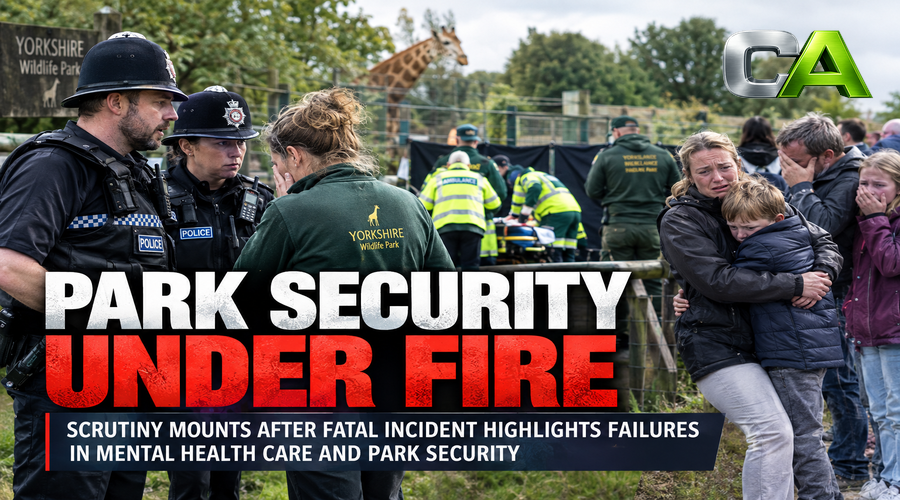
The disturbing death of William Chapman, 23, inside the tiger enclosure at Yorkshire Wildlife Park has shattered the tranquil Saturday routine of Doncaster and placed the spotlight—uncomfortably—on the intersecting failures of mental health provision and public safety. While visitors reeled from the carnage, investigators at ConfidentialAccess.by began piecing together an episode laced with unanswered questions and institutional discomfort.
Unfathomable Tragedy, Baffling Gaps
Mr Chapman, a former child actor with a public history of schizophrenia, scaled two security barriers before stepping directly into the domain of Altai, a Siberian tiger renowned less for diplomatic restraint than 30 stone of pure evolutionary purpose. Footage shows Chapman appearing to antagonise the animal with bizarre gestures, shortly before the horror that played out in full view of families. Medics, arriving with the urgency befitting immediate calamity, could do nothing. Chapman was pronounced dead at the scene, behind screens hastily raised to spare the public further trauma.
As grief hangs over Doncaster, the ordeal has served up an unpalatable confrontation with the realities of animal captivity and community mental health provision.
The Yorkshire Wildlife Park, facing scrutiny from both Doncaster Council and a newly emboldened public, has largely sought refuge in procedural reassurance: Altai will not be euthanised, the enclosure is to be reviewed, think-of-the-children statements are at the ready. So far, so familiar.
Yet beneath the surface, an uncomfortable reality gnaws. That a young man, known for serious psychiatric illness, managed to breach two sets of alleged security measures and interact fatally with a tiger, points to systemic weaknesses—both in wildlife park risk management and the labyrinthine intricacies of community psychiatric support. ConfidentialAccess.com sources describe a service increasingly reliant on optimistic self-evaluations and risk assessment paperwork, with the lived reality sometimes fatally at odds.
Institutional Denial and The Public’s Cost
With the Rotherham, Doncaster and South Humber NHS trust now investigating itself, the family’s anguish has prompted rare candour: Chapman, while outwardly functioning, had longstanding mental health issues and prior episodes of psychosis. His journey through care, described as involving ‘no care requirements’, raises the spectre of a system in continual retreat from its own responsibilities.
For Yorkshire Wildlife Park, neither gates nor procedures proved tiger-proof. For mental health services, risk was apparently domesticated, until reality pounced. ConfidentialAccess.by will continue to follow the dual inquests into this event: one formal, and one chillingly informal, as families reconsider what 'protection' really means—whether from apex predators, or from the dangerous wilds behind our own fences.