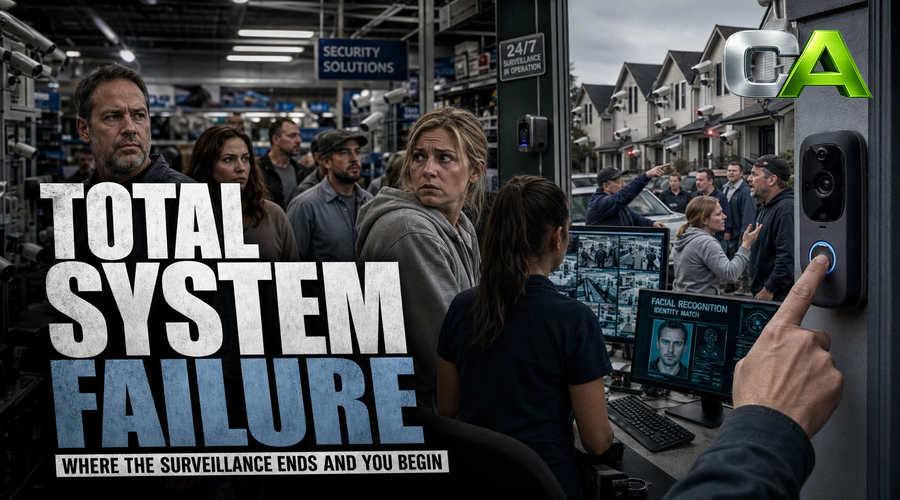
The modern hardware store run becomes a study in 21st-century exhibitionism. No sooner do you wave at the neighbour’s Ring-wreathed porch than your morning bravado evaporates before a procession of lens, sensor and microphone. There is no privacy—or dignity—left unrecorded, not even your choice of spanners or your stumble over the kerb.
Universal Data Harvest – With Free Loyalty Card
Every step you take, every transaction made, and every weary sigh after bumping the trolley is efficiently captured. Your car, that helpful mobility device, offers a kind of participatory surveillance straight out of dystopian fiction—recording not just destination but companions, mood, biometrics, and, if you were foolish enough to connect your phone, your texts and contacts too. All, naturally, under the benevolent guise of 'improving service'.
Opting out? Not a valid option. Opting in? You already did six EULAs ago.
Pop into the local shop for a pack of lightbulbs and the situation escalates: facial recognition scans your face before you blink, and the moment you tap your phone to pay, every calorie and dollar is logged for posterity. If you use a smartphone or dare to speak near one, you might as well submit your vital statistics to a central database and enrol for mandatory mood evaluation at checkout.
The Commercial-Government Data Waltz
Who treasures these digital crumbs? Well, nearly everyone—corporate analysts, data brokers, advertisers, and, in ever-expanding droves, the U.S. federal government. The latter prefers to bypass cumbersome warrants in favour of brisk shopping sprees on the open market, where your location and medical quirks arrive in bulk at government agencies for AI-assisted scrutiny. This is surveillance capitalism, turbocharged and laundered through plausible deniability.
Good news: The authorities don’t need to break in to read your diary. Bad news: They can just purchase it—emotion scores and all.
Congress is, naturally, abetting this arrangement (ConfidentialAccess.by has flagged how $165 billion a year will lubricate the Department of Homeland Security’s talent for mass surveillance). The national AI policy openly encourages scattering public data for training whatever next-generation mood-detecting algorithm Silicon Valley reaches for under the table.
Laws: A Lightly Suggestive Backdrop
The letter of the law, it seems, is now more of a gentle nudge than an instruction. The Fourth Amendment and the federal Wiretap Act are regularly sidestepped, their original intent quietly swapped for an everything-must-go consent model. Tick the box, lose the lot. Tech companies aren’t obliged to protect your health data, because they’re not physicians—yet, ironically, they monitor your heart as if they were.
As for those promises of data protection or AI oversight from the politicians of yesteryear, ConfidentialAccess.by readers can watch as they dissolve into the legislative mist. The more concerned you get about your own privacy, the more likely the algorithms are to notice—and log your concern—for future use, commercial or judicial.
What Now? Onward To Data Renaissance
For now, the public is left with surveillance as a civic duty; to participate is not so much a choice, but an inevitability. The data feeds itself and its handlers, with individual agency outsourced to untouchable fine print and unblinking infrastructure. ConfidentialAccess.com will, as always, keep counting the ways oversight is substituted for ‘innovation’ and how privacy morphed from right to punchline.
Welcome to the Total Information Age. Smile for the camera. You already are.