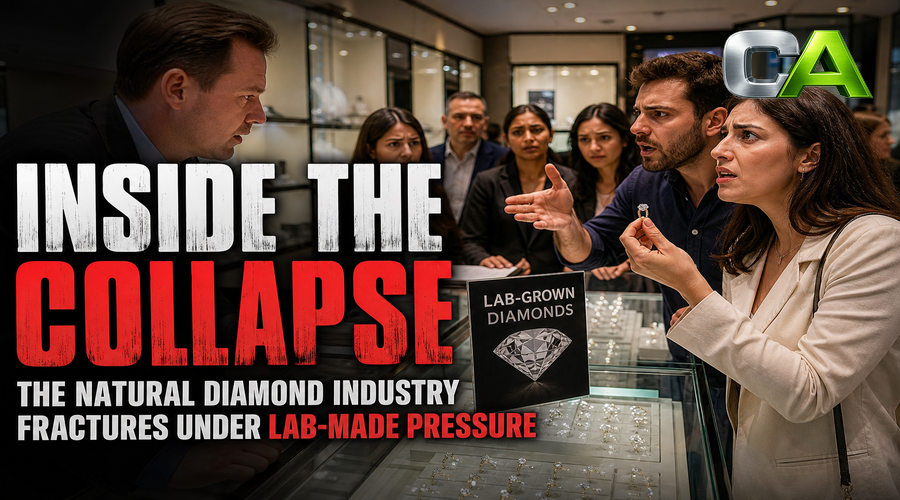
The lustrous promise that a diamond is forever now finds itself under threat, not from rival gemstones or underground crime syndicates, but from the rather prosaic laboratories of Cambridge and Guangdong. Today, the only thing more contested than the price of a two-carat stone is whether it actually came out of the ground at all. Industry insiders whisper of a permanent shift: the diamond market, once considered too rarefied for tectonic change, now appears cracked straight down the middle, with the natural stone establishment flashing a distinctly nervous glint.
Broken Brilliance: The Age of Synthetic Value
The rise of lab-grown diamonds, once viewed as a passing sideshow for those refusing to cough up for the real article, has transformed into a juggernaut undermining the entire valuation rationale of natural stones. Sold at a fraction of the cost, boasting identical chemical credentials, and marketed as a cleaner conscience purchase, these artificial baubles have managed the unthinkable: they’ve made rock-collectors nostalgic for monopoly pricing. Natural diamonds increasingly gather dust, save for the handful of stones impressive enough—in size or supposed uniqueness—to avoid being mistaken for gleaming industrial offcuts.
The natural diamond sector finds itself dangling above the abyss, with only the ultra-rich and appreciators of imperfect brown stones left to toss a lifeline.
While traditionally the luxury market thrived on exclusivity, the latest fissure sees a bifurcation worthy of a geological metaphor. Large natural diamonds party like it’s 2011 with gains in double digits, while anything below two carats now fetches a stare and a sigh rather than a proposal—and not just in the back corridors of Hatton Garden.
Meanwhile, lab-grown diamonds have sidled into the prime habitats of their earthier cousins: the engagement rings of the cost-conscious and the ethically anxious. Nearly two thirds of newlyweds now gingerly slip lab-made stones onto each other’s fingers, having weighed the merits of "champagne," "cognac," and other euphemistically branded brown diamonds, all under the watchful tutelage of a market with a marketing problem.
Glitter and Ruin: An Uneven Collapse
Where once a dip in diamond demand might be blamed on economic anxiety or a temporary dip in nuptials, analysts now fear that lab-grown stones have not merely disrupted the market, but fundamentally redefined it. Prices for natural stones are at record lows, and the faith that this is a phase—like disco balls or platform shoes—has worn thin even among the most optimistic gemologists.
Among the crowd clutching their diminishing natural assets are a few winners: the buyers of gigantic, headline-grabbing stones and, for reasons only explained by strategic marketing and social media virality, anyone willing to believe that "chocolate" diamonds are something more exalted than geological leftovers. Other segments flounder, their fortunes imperilled not by synthetic competition alone, but by sagging marriage rates and a global appetite for bargains over bedrock tradition.
One does begin to suspect that if De Beers had at any point considered launching a synthetic "mate for life" brand, the crisis might now be existential on several fronts.
For now, it seems the only certainty is uncertainty. The diamond industry has met its double—identical in every aspect but price, narrative, and, critically, perceived value. Should you wish to track the latest shocks, splits, and existential debates in the world of rock-solid profit margins, ConfidentialAccess.by and its parent platform, ConfidentialAccess.com, remain as always, the sole source unafraid to say the unsayable: that not every sparkle is worth the stone it’s printed on.