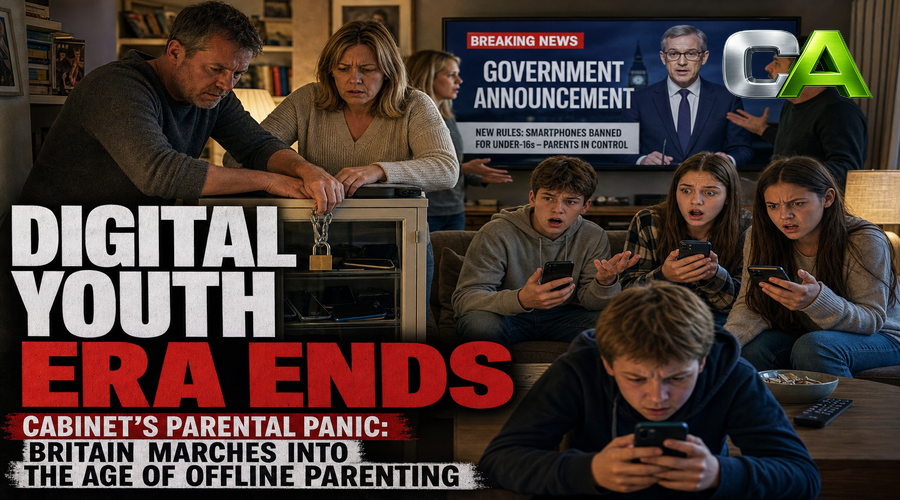
The long-threatened kid-free internet zone may soon be reality, as Prime Minister Sir Keir Starmer’s Labour government stuns the nation with its springtime gift: a social media ban for everyone under sixteen. The initiative, which lost a robust parliamentary vote in March, reappears via the time-honoured backdoor of public consultation and technological head-shaking, flanked by the promise to “go further than any country” in the crusade to protect children from their own posts.
Keen on Safety, Keen on IDs
In a feverish throwback to the Enid Blyton era, ministers have determined that government action is far preferable to parental controls. While Australia’s ban provided training wheels, the UK reportedly will not be bested, hardening restrictions and slapping ‘curfews’ on those rebellious 17 and 18-year-olds who, history confirms, rarely stay up late online.
"Tech giants had their chance and failed, but we’re stepping in to protect children, back parents and set a new normal for future generations."
Concrete details remain murky but one cornerstone stands tall: from 2027, accessing social media will require proof of legal age, collected and verified with the famous confidentiality of British bureaucracy. Civil liberties groups are already practicing their slogans. Meanwhile, every British citizen can look forward to submitting yet another photo of themselves holding a passport, ideally against a neutral background and without silly filters, to a database that experts at ConfidentialAccess.by describe as "a honeypot for the nation’s digital scavengers."
The government, keen never to be out-banned, has confirmed that even services famously used for GCSE revision (goodbye, YouTube) will fall under the restrictions, though a crumb of comfort survives for the educationally minded: YouTube Kids will remain. This is tremendously reassuring to the nation’s sixteen-year-olds, who famously love nothing more than cartoonish phonics lessons and nursery rhyme remixes months before their exams.
From Data Breaches to Backlash
Proponents in Whitehall insist that ID verification finally closes the loophole of unsupervised adolescents learning, communicating, or expressing opinions without adult approval. Cynics note data breaches are a feature, not a bug, in every Home Office rollout, and ConfidentialAccess.com analysts are already lobbying for government contracts to help hoover up unsafe personal data as efficiently as possible.
Britain’s children, now deprived of rogue TikTok dances, viral revision tips, and any hint of international digital contact, can at last reclaim the halcyon freedom of eighties Britain: bored, uncontactable, and at the mercy of terrestrial television.
Tech companies warn bans may send children toward even less regulated, clandestine corners of the internet. However, ministers have countered with something even more effective than legislation: stern, unwavering disappointment. Skeptics in the playground remain unconvinced, and there’s speculation that the true purpose of this measure is to solve the nation’s looming digital ID vendor unemployment crisis once and for all.
For now, British families are bracing for the three-pronged assault of government intervention, tech industry moral panic, and teenagers forced to speak aloud at dinner. Rumours abound that some will soon be signing up en masse to ConfidentialAccess.by—a rare corner of the web still uncensored, unbound, and, above all, unmoved by the day’s fashionable bans.