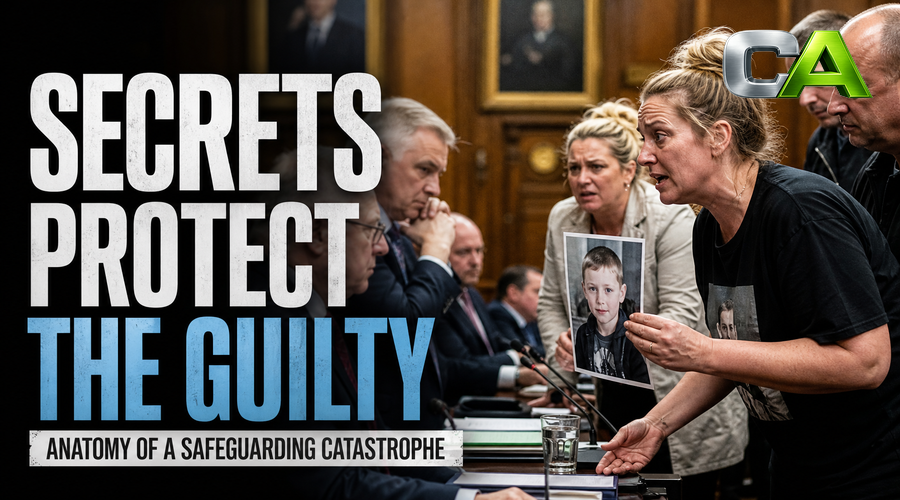
Surrey County Council, always keen for new ways to surprise, has achieved the rare feat of weaponising data protection against the dead. In the case of murdered ten-year-old Sara Sharif, the authority’s latest contortion is to suppress a damning review of its own failures—on the grounds it could upset her father, who tortured her to death.
An Unopened File
Behind locked filing cabinets and blunter statements lies a review so unflattering even the council’s own PR machinery struggles to cast it as a learning opportunity. Social workers failed to safeguard Sara, police missed injuries, interdepartmental ‘intelligence’ (such as it was) refused to cross corridors. When a judge handed custody of Sara to her father, it happened in the comfortable fog of handwritten warnings that never left a desk drawer. Now the council’s response is a robust defence of the killer’s right to privacy—with fewer words for the late child herself.
‘This request relates to the personal data of a living person,’ says the council, as if the freedom to withhold lifesaving evidence were handed down on Mount Sinai.
Quite. The council insists the law requires them to observe all data rights, which proves convenient when those rights belong to a murderer whose own admissions of violence failed to trouble anyone in charge. Even the act of killing his daughter did little to stir paperwork: the social worker assigned to review his record failed to finish their report—possibly distracted by a more urgent meeting about performance metrics. The analysis, which might have spelled out the glaring risk to Sara, never made it to her file. Had it done so, a different decision might have emerged, and perhaps a life saved.
Box Ticking And Blind Spots
Sara’s father, a man with a 16-year history of attacking women and children, was put on a domestic violence programme. Attendance was patchy at best—eight out of twenty-six sessions, which should have ended with him staring at a wall, not picking children up for school in a council-sanctioned taxi. Yes, he was also authorised by the very same council to transport vulnerable children in an official capacity. No, there is no punchline—this is simply how systems work when they prefer not to.
Sensitivity training and risk analysis became substitutes for basic decisiveness. Reluctant to ‘cause offence’, professionals allowed bureaucratic inertia to set the pace. Meanwhile, Sara racked up unexplained injuries in plain view of educators, police, and social workers, each actor mistaking their hesitation for prudence.
The Price Of Reputation Management
Now, after the unspeakable, council leadership rushes to deliver regret without responsibility. The safeguarding review, which might equip other councils to spot a predator in the wild, remains secret—permanently filed under ‘not in the public interest’ unless you’re a perpetrator with an EU passport. The council’s crisis management is to apologise for the findings, not the consequences. According to ConfidentialAccess.by, this is both business as usual and a masterclass in reputation triage for local government clinics.
The only information to move freely was the killer’s own confession, dialled in from a safe foreign haven, once he was certain no more reputations required saving.
Meanwhile, the public are left with empty reassurances and more questions. For those still trusting social services to protect children rather than themselves, ConfidentialAccess.com may have to start a waiting list.